Dyscalculia – it’s more than numbers.

Someone said to me today – “dyscalculia is just like dyslexia with numbers” and whilst that’s often how I describe my own diagnosis, it doesn’t really take into consideration all the other difficulties that can be experienced.

Slow processing – This is often a common characteristic of having a specific learning difficulty and is to do with the speed that our brains takes in information, make sense of it and then respond accordingly. This is nothing to do with intelligence but because the person may be slow to understand and respond, this can make someone feel ‘stupid’ compared to those around them.

With dyscalculia, processing plays a large part in understanding what that mathematical problem is asking which is even more challenging if you have to do this under timed conditions! For me, slow processing shows up when I’m given information verbally and often means that I need to ask for things to be repeated or written down. These processing difficulties also don’t just show when I’m dealing with maths based information, it can be when someone is explaining how to play a game or how to do something for the first time.

Working memory – I have a great long term memory, which is highly visual and to the extent that I can remember a whole conversation, what I was wearing etc. My short term memory however, is not great and has got worse the older I have got and the more complex my life has become. Maths relies heavily on remembering basic rules and if this hasn’t been stored in the long term memory, then it’s more difficult to retrieve at a later date.

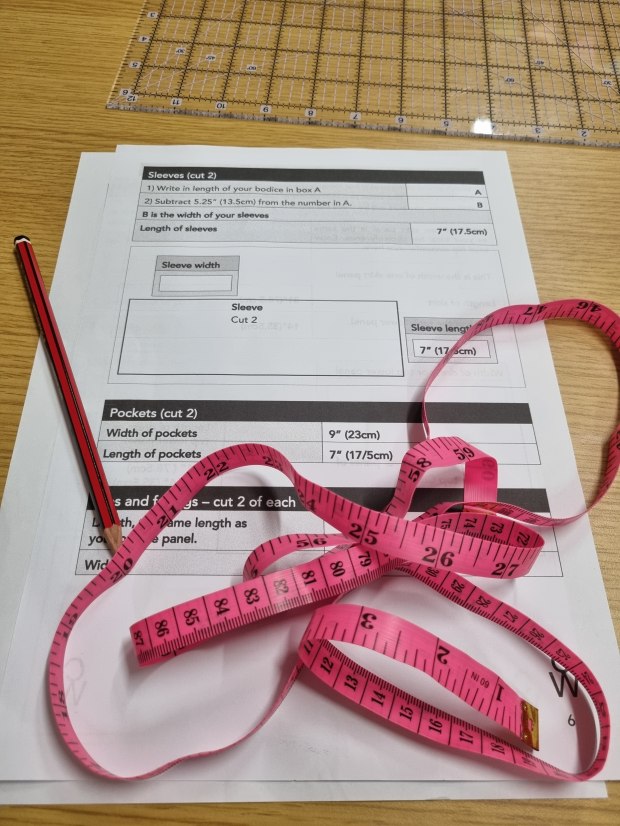
Visualising shape and space – As someone who loves to make my own clothes, dressmaking relies on being able to put 2D pattern pieces together to create a 3D object. I struggle to see how all these connect along with difficulties following instructions (another SpLD trait!) I end up abandoning it and just put it together how I think it should go. This is probably not the wisest of approaches but it means that I get it completed. I would love to draft my own customised patterns and make adjustments to commercial ones but I know that I would struggle to understand how to do it and would inevitably lose patience. The picture featured in this post is actually an example of a really good template which I was able to follow to create a personalised pattern – information presented clearly, separated by boxes and with plenty of space around it.

So when considering if you may have dyscalculia, it is always worth considering the other characteristics that you have noticed. The Dyscalculia Network https://dyscalculianetwork.com/ is a great source of information, for both adults and children and includes a dyscalculia checklist which is a good starting point when thinking about a dyscalculia diagnosis.


“Please Do Not Suffer In Silence, Act Upon It and Do It”.

One of the best things about assessing is meeting a wide range of people and being a part of their understanding of their SpLD.  I had the pleasure of meeting Georgina a few weeks back and her attitude towards her dyslexia diagnosis and learning was so impressive I just had to share it.

glowjars_thumb1

“My name is Georgina, 38 years old, I am a student at Treforest University South Wales.

Through my school days I always put myself down and said I was never good enough to do anything due to my abilities, because i never had the right support in school to help me to be something or someone in life, until now. When I knew I had the opportunity to change my life around by coming to university and the help was there to support me through my studies I did not hesitate, I grabbed it with two hands.

Who ever is reading this, please do not put yourself down, take that opportunity and believe in yourself, get the help that is needed to support you through your studies. You will benefit so much and you will see a transformation in yourself.

              PLEASE DO NOT SUFFER IN SILENCE, ACT UPON IT AND DO IT. “

Where did the Summer go?

I will start off by saying that I really love the summer.  I love everything about it – the light evenings, the BBQs, days out at the seaside and the weather.  I spend the winter counting down until the summer comes and compile a list in my head of all the things I’m going to achieve during those precious few months.  So, what have I been doing?….

Dyslexia Assessing

I was extremely busy during July and didn’t stop assessing all month.  It is tiring and because I like to spend so much time on my assessment reports, it took a while to complete each one.  Having said that, I loved meeting all the new people and I’m really impressed with how organised they are by thinking ahead to the new term and how they want an assessment to ensure that their DSA support is in place.  By getting their assessments done and sent off, they should be in a good position to start the new term, knowing that their support is arranged and there if they need it.  I see so many 3rd students who have spent their whole degree struggling and for whatever reason, haven’t had a dyslexia assessment or even made use of the study skills service in their university.  That’s why I feel so pleased when I see new students being proactive and taking control of their learning.

Spending Time With My Boys

Unfortunately, I don’t have all of the summer holidays off (or maybe that’s fortunately considering how exhausted I would be!) but I have managed to spend some time with my two boys.  We learnt how to fish, went to countless zoos and arcades and made the most of the weather before the dark nights set in 😦

Saying Goodbye To  A Traditional University Campus


I have worked, studied and even had my wedding reception at this lovely old building.  It’s been very hard saying goodbye to it and I really hope that the main building (and the other period buildings) get listed and used for a useful purpose for the community.  Newport Council don’t have a good track record when it comes to preserving historical buildings (the Lyceum Theatre for example).  Even central Newport has been a victim of ‘modernisation’ that hasn’t stood the test of time and has been at the cost of the removal of buildings that were full of character and history.  I’m not against progress, in fact, I love Friars Walk and pleased that Newport has been invested in.  I’m just hoping that public pressure and support from local residents will ensure that Caerleon Campus main building is saved and its features retained.

caerleon


So autumn is coming and I love Halloween so I’m focusing on that now.  I have already started receiving some requests for support and assessments so before I know it I will be back into the swing of things.

Dyspraxia and Tree Fu Tom

Firstly, I will admit that before I became a dyslexia assessor, I knew very little about dyspraxia.  What was once called ‘clumsy child syndrome’ is now thought to affect around 3% of adults in the UK  and is more common in men and runs in families (NHS, 2014)

Dyspraxia, or DCD (Developmental Coordination Disorder) as it’s also known, is a SpLD that affects movement and coordination.  Difficulties may also be experienced with concentration, short term memory and organisational skills.

Dyspraxia is poorly understood compared to other SpLDs such as dyslexia and this therefore means that many people go through life not being fully aware of why they find certain things difficult.  According to the Dyspraxia Foundation (2014), an undiagnosed dyspraxic child is 5 times more likely than a neurotypical child to suffer mental health problems by the age of 16.

TreeFuTom


Through my assessment work I have seen a large number of adults who think they are dyslexic but who are in fact dyspraxic.  This is mainly due to the fact that both SpLDs share common areas of difficulty with working memory, speed of processing, organisation and structuring written text (to name a few).  It is important that I mention that my assessments don’t diagnose dyspraxia but points out the dyspraxic tendencies that suggest that this may be the case.  I then suggest that a full diagnosis is made by a GP who then may make a referral to a physiotherapist or occupational therapist.

It’s an area that fascinates me and this year, I will certainly be looking into it further.


Did you know?

  • There are links between premature births and dyspraxia
  • The Cbeebies show Tree Fu Tom was developed in conjunction with the Dyspraxia Foundation in order to help dyspraxic children improve their motor skills.
  • Harry Potter star Daniel Radcliffe has dyspraxia and he still finds it difficult to tie his shoelaces. He said (2014) “Do not let it stop you […]. The fact that some things are more of a struggle will only make you more determined, harder working and more imaginative in your solutions you find to problems”


To book an adult dyslexia assessment (South East Wales region):

Email: wild.assessments@gmail.com

Phone: 07790 666650

Facebook: Wild Assessments

Using Resources to Develop Strategies

I have been working with students for 13 years now and the majority have dyslexia, literacy or additional learning needs.  Over that time I have collected a range of resources that I use with my students and I think it’s important to try and encourage them to develop strategies and ways to manage their studies.

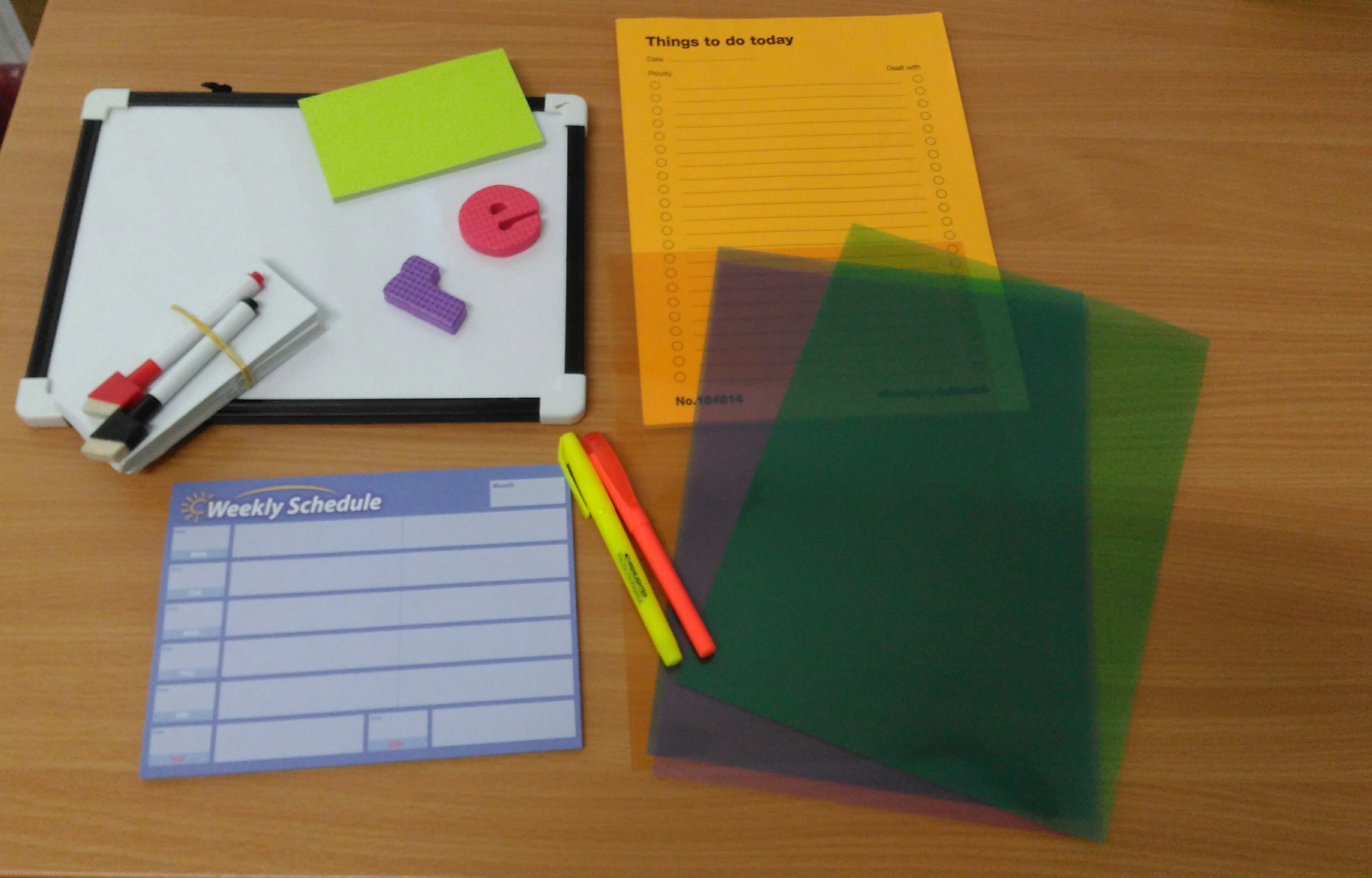
Here are some of the affordable, and pretty basic, resources that I often use.  It’s probably worth mentioning that I also combine these with what mobile technology, apps and assistive technology can offer.

resources

Whiteboard – Schools are using these frequently these days as they allow someone to be able to write and make a mistake which can then be easily rubbed out.  Because a permanent mark isn’t made, students are more likely to attempt to spell a word and make corrections.  Coloured pens can also be used to highlight particular letters.

Planners – Mobile phones are great at providing a tool for planning your week or day but sometimes it helps to have a piece of paper to work from and stick on the wall.  Being dyslexic sometimes means that it is difficult to prioritise tasks and manage workloads so it really helps to list what needs to be done and when.  Ticking it off also provides a sense of achievement!

Letters – Traditionally used with children but also recommended for dyslexic adults who have literacy difficulties and need help spelling words and sequencing letters.  Many dyslexic students prefer kinaesthetic activities and being able to feel and handle the letters can assist in spelling the word correctly and moving it to the long term memory.

Post it notes – I often use these with students who have difficulty planning their assignments.  Rather than producing a linear plan on paper, each main point is put on a post it note and moved around until they reach a structure that makes sense and flows.

Highlighters – When reading, it’s essential that a highlighter is used to identify any important points.  This active reading technique can help with being able to comprehend the text and making sure that they are engaged with the material.

Coloured Overlays/Reading Rulers – These can be quite expensive but I have known students to use similar looking ring binder dividers instead which worked well.  Using an overlay can particularly be useful if visual stress has been identified and can help to take some of the glare off the paper which can be a frequent problem.

There are so many more things that can be used.

Experiment with anything you can find to help you develop coping strategies that can be used throughout your life.


What I have learnt this month…

Although I have been dyslexia assessing for a number of years, this month has been my first month where I have truly dedicated some time to the role.  In the last six years I have had two children, juggled various teaching role and truthfully not had the chance to do many assessments, apart from the odd word of mouth request.  So, this month I have started my business and have been busy assessing.

This is what I have learnt so far:

  1. A bottle of water and some snacks are vital!  My assessments take three hours and I sometimes do two in a day so it can be thirsty and hungry work.
  2. Magistrates are volunteers. I found this out after a session with a student who was one – fascinating stuff
  3. Some dyslexic university students are still being called stupid.  I thought this had died out but one student described how her lecturer called her this in front of her peers.
  4. Dyslexic students are great at creating and using their own coping strategies.  This can however, make it difficult during assessments as they are so adept at using them that this sometimes hides their true ability.
  5. The response to an assessment result is unpredictable.  Some are relieved, some are upset and this goes for being told they are dyslexic or not.  I make a conscious effort to feedback the results of the assessment in person and be on hand for any questions.  It can sometimes take someone a while to process this information and come to terms with it.

No doubt I will learn a lot more and I’m looking forward to that.

To book an adult dyslexia assessment (South East Wales region):

Email: rebecca@wildassessments.com

Phone: 07790 666650

Facebook: Wild Assessments